

Services
Make it stand out.
-
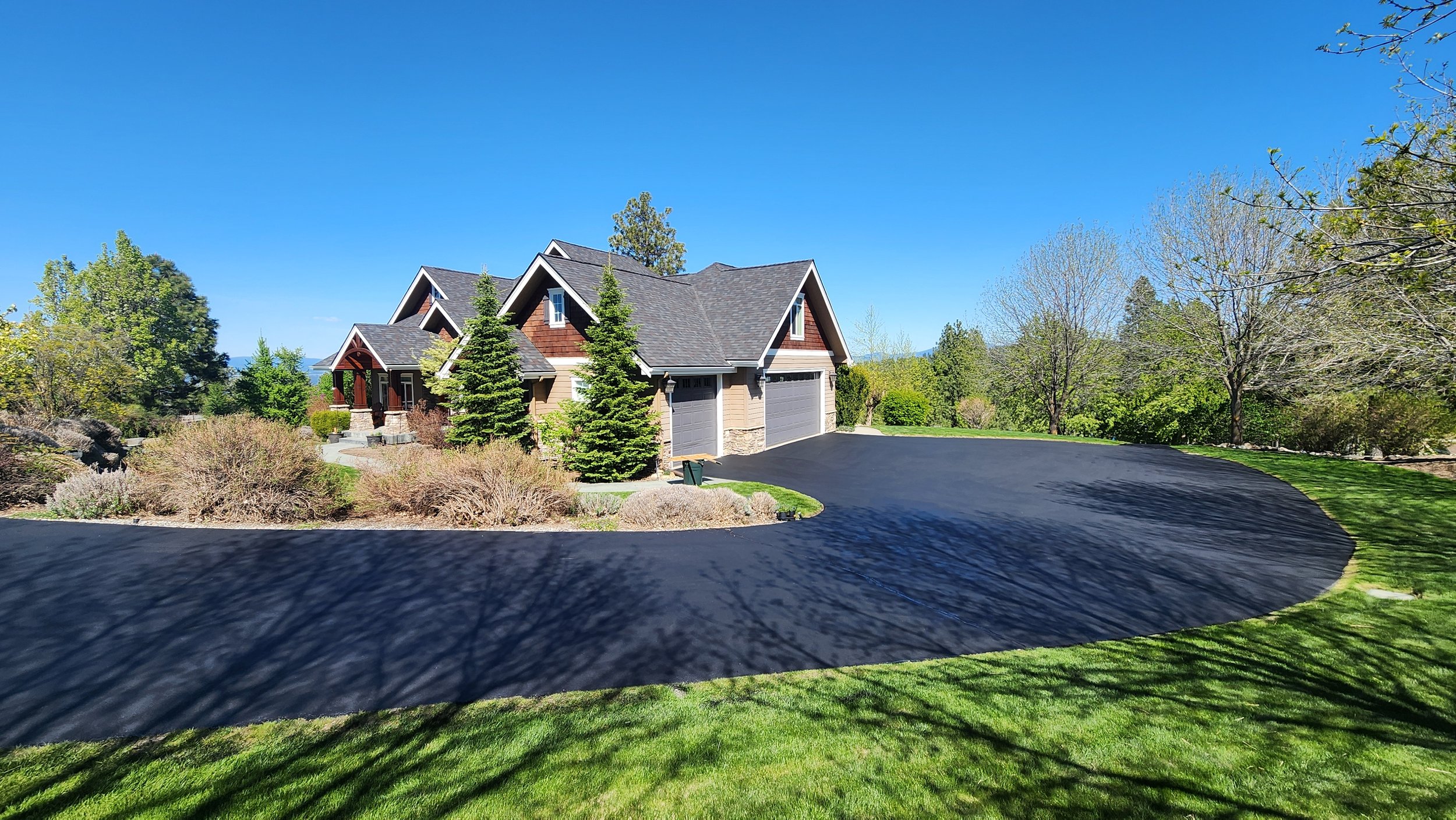
Sealcoat
Sealcoating is a protective treatment applied to asphalt pavements to extend their lifespan and improve their appearance. It involves spreading a liquid asphalt emulsion, coal tar, or latex-based blend over the surface, which acts as a barrier against water, oils, UV rays, and temperature fluctuations.
Here's what to expect for both residential and commercial customers:
Residential Sealcoating:
- Purpose: Protect driveways from weather damage, oil spills, and cracks.
- Process: Typically involves cleaning the driveway, filling cracks, and then applying the sealcoat evenly.
- Duration: Usually takes 24-48 hours to cure fully.
- Benefits: Enhances curb appeal, prolongs pavement life, and reduces maintenance costs.
- What to Expect: Limited traffic during curing; avoiding parking on the sealcoat is recommended for at least 24 hours.
Commercial Sealcoating:
- Purpose: Maintains large parking lots, garages, and other paved surfaces, ensuring safety and appearance.
- Process: May involve periodic cleaning, crack filling, and sealcoat application, often with specialized equipment for large areas.
- Duration: Curing times are similar, but scheduling may require coordination to minimize disruption.
- Benefits: Extends pavement life, improves appearance, and increases safety for customers and employees.
- What to Expect: Temporary parking restrictions or rerouting during application; clear communication about scheduled work is provided.
-
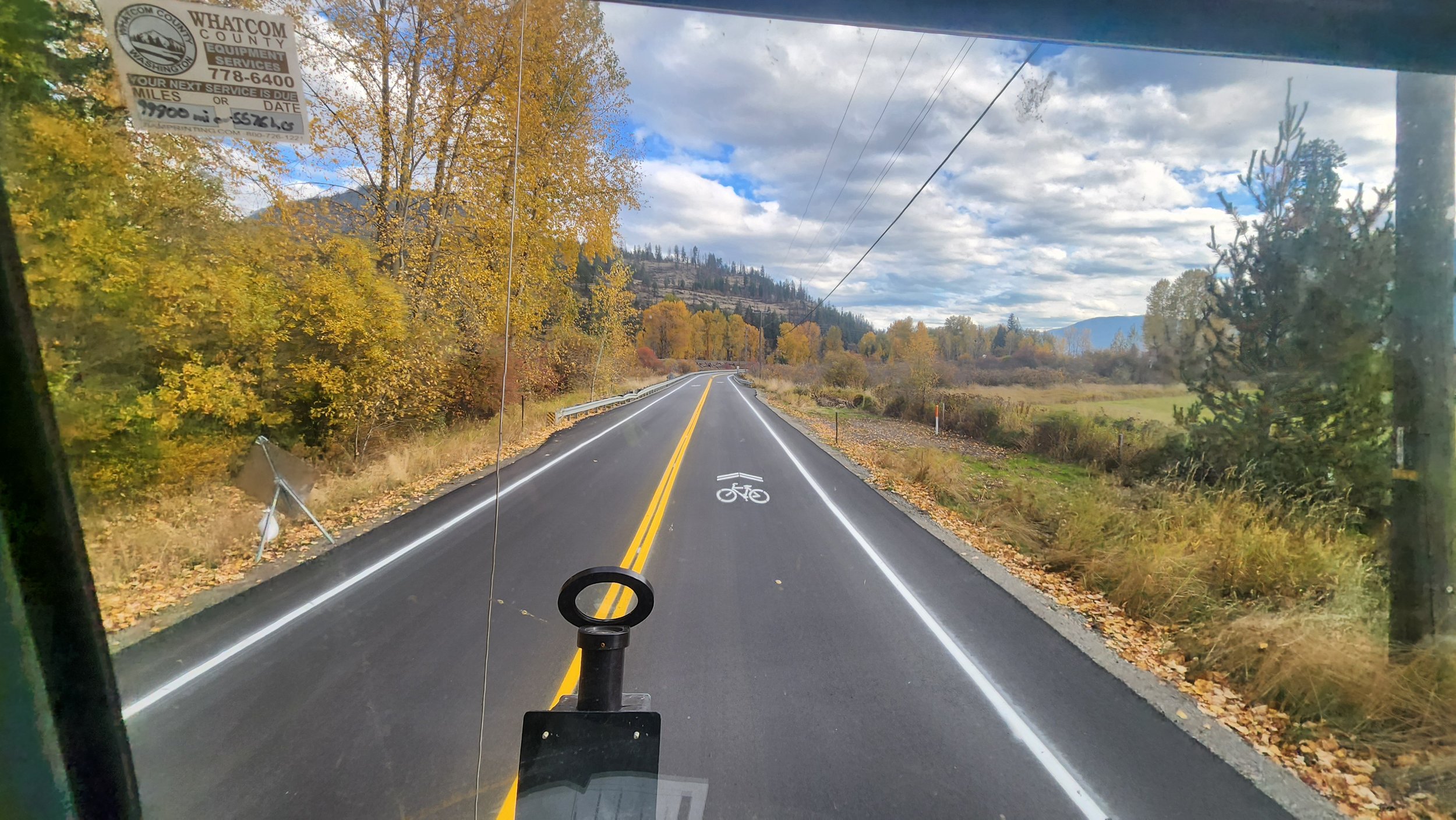
Striping
Overview:
Parking lot and road striping involve applying fresh paint or thermoplastic markings to create clear, durable lines that organize traffic flow, designate parking spaces, and enhance safety. Proper striping improves the functionality and appearance of parking areas and roads.
Parking Lot and Road Striping for Commercial and Residential Customers:
- Purpose:
- Define parking spaces, fire lanes, crosswalks, and directional arrows.
- Improve safety, organization, and accessibility.
- Enhance the overall look of the property.
- Process:
- Preparation includes cleaning the surface to remove dirt, oil, and previous markings.
- Layout planning ensures accurate placement of lines and markings.
- Applying striping with high-quality paint or thermoplastic for durability.
- Corrections or touch-ups are performed as needed for clarity.
- Duration:
- Striping work usually takes a few hours, depending on the size of the area.
- The markings are dry and ready for use shortly after application.
- What to Expect:
- Minimal disruption during the process.
- Temporary restrictions on movement in the area during striping.
- Proper curing time to ensure longevity of the markings.
- Regular maintenance may be needed to keep markings clear and
-

Sports Courts
Overview:
Sports court markings involve applying precise, durable lines and symbols on surfaces such as basketball, tennis, volleyball, or pickleball courts. Proper markings define the playing areas, boundaries, and key zones, ensuring fair play and clarity during games.
Sports Court Markings for Recreational and Professional Facilities:
- Purpose:
- Clearly define boundaries, service areas, and other critical zones for various sports.
- Improve safety by preventing player confusion.
- Enhance the aesthetic appeal and professionalism of the court.
- Process:
- Surface cleaning and preparation to ensure proper adhesion of markings.
- Layout planning to ensure accurate placement of lines and markings according to sport regulations.
- Applying high-quality, weather-resistant paint or thermoplastic markings.
- Additional symbols or logos can be included for branding or team identification.
- Final inspection to ensure clarity and correctness.
- Duration:
- Marking a sports court generally takes a few hours, depending on the size and complexity.
- Markings cure quickly but should be protected from heavy use during initial drying.
- What to Expect:
- Minimal disruption during application.
- Clear, sharp lines that stand out for gameplay.
- Regular maintenance and repainting may be needed to ensure longevity and visibility over time.
-
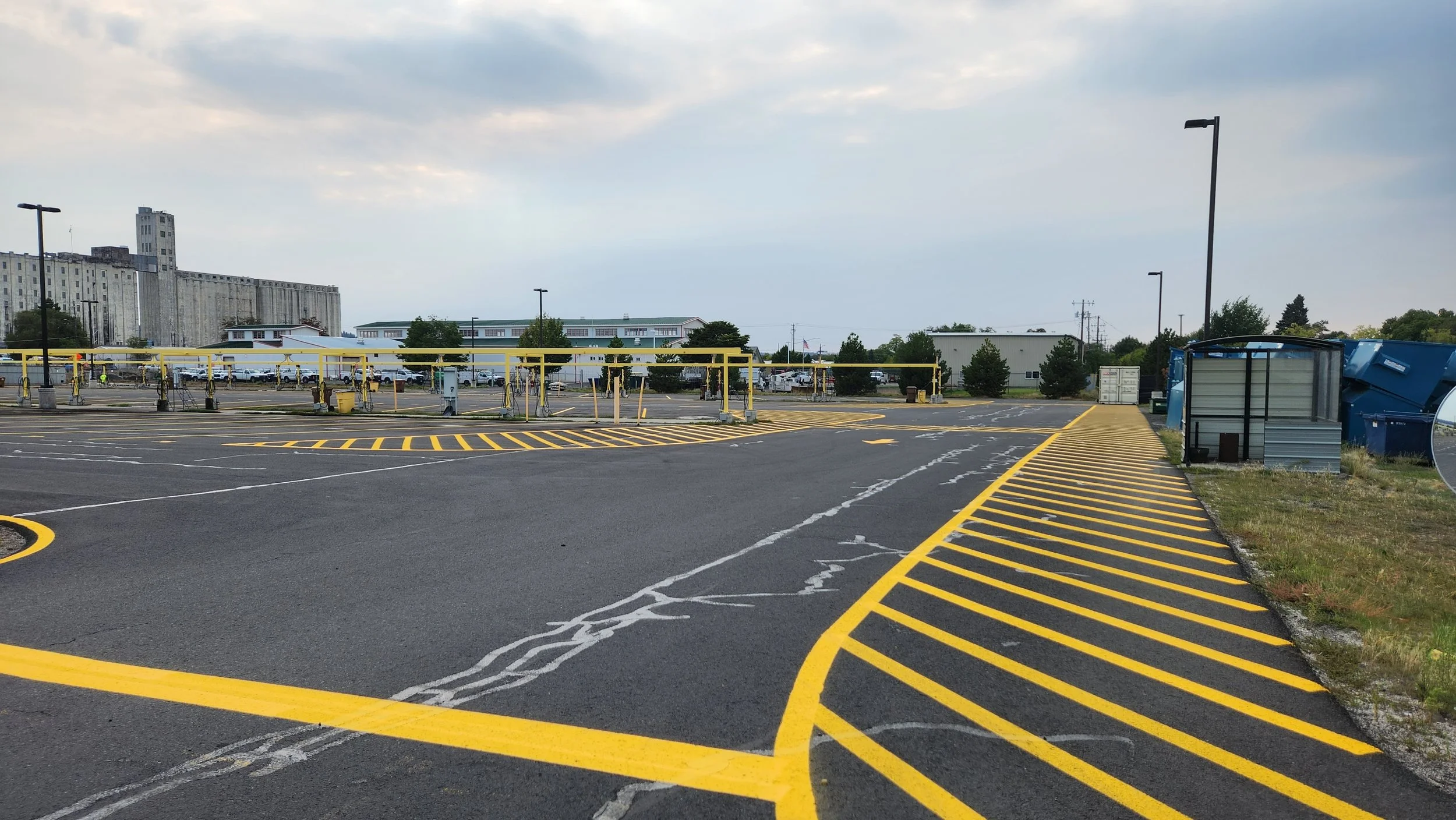
Crack Seal
Overview:
Cracksealing is a crucial maintenance process for pavements, such as roads, parking lots, and sidewalks. It involves sealing of cracks to prevent water infiltration, which can lead to further deterioration and costly repairs.
Cracksealing Process:
- Inspection:
- Identify and locate all visible cracks in the pavement surface.
- Assess crack width, depth, and severity to determine the appropriate sealing method.
- Preparation:
- Clean cracks thoroughly using specialized tools like compressed air, wire brushes, or high-pressure steam to remove debris, dirt, and vegetation.
- Ensure cracks are dry and free of loose material for optimal sealant adhesion.
- Sealing:
- Choose suitable sealant material based on climate, pavement type, and crack size (hot-applied rubberized asphalt or cold-applied sealant).
- Apply sealant carefully to fill cracks completely, ensuring a watertight seal.
- Finishing:
- Smooth and level the sealant surface if needed, and remove any excess material.
- Allow sufficient curing time according to manufacturer guidelines.
Benefits of Cracksealing:
- Prevents water from infiltrating pavement layers, reducing the risk of potholes and further cracking.
- Extends the lifespan of the pavement.
- Cost-effective compared to extensive repairs or resurfacing.
-
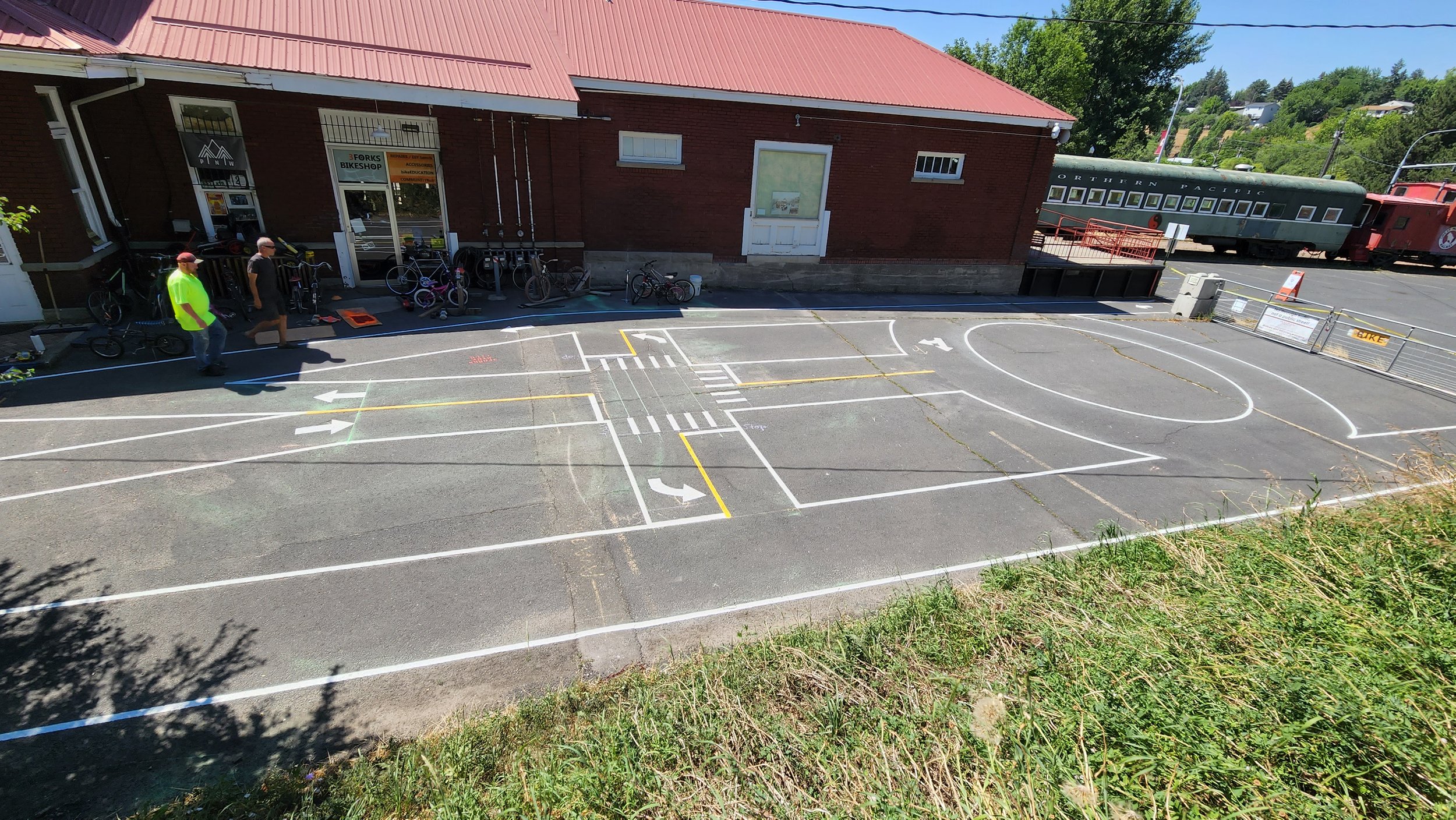
Specialty Striping
Our Specialty Striping Services
At Bright Line, we specialize in high-quality, custom striping solutions tailored to meet your unique needs. Our expert team provides a wide range of services, including:
- Playground Striping: Bright, durable markings designed to create safe and fun play areas for children, including sports courts, playground zones, and activity spaces.
- Custom Stenciling: Personalized stenciling for a variety of applications, from business logos and decorative patterns to safety instructions and directional signs.
- Custom Pavement Markings: Unique and creative pavement markings tailored to your project, whether for branding, special events, or functional signage on parking lots, streets, or industrial sites.
Our team uses high-quality, long-lasting materials to ensure your striping remains vibrant and effective over time. We pride ourselves on precision, attention to detail, and delivering solutions that combine functionality with aesthetic appeal.
-
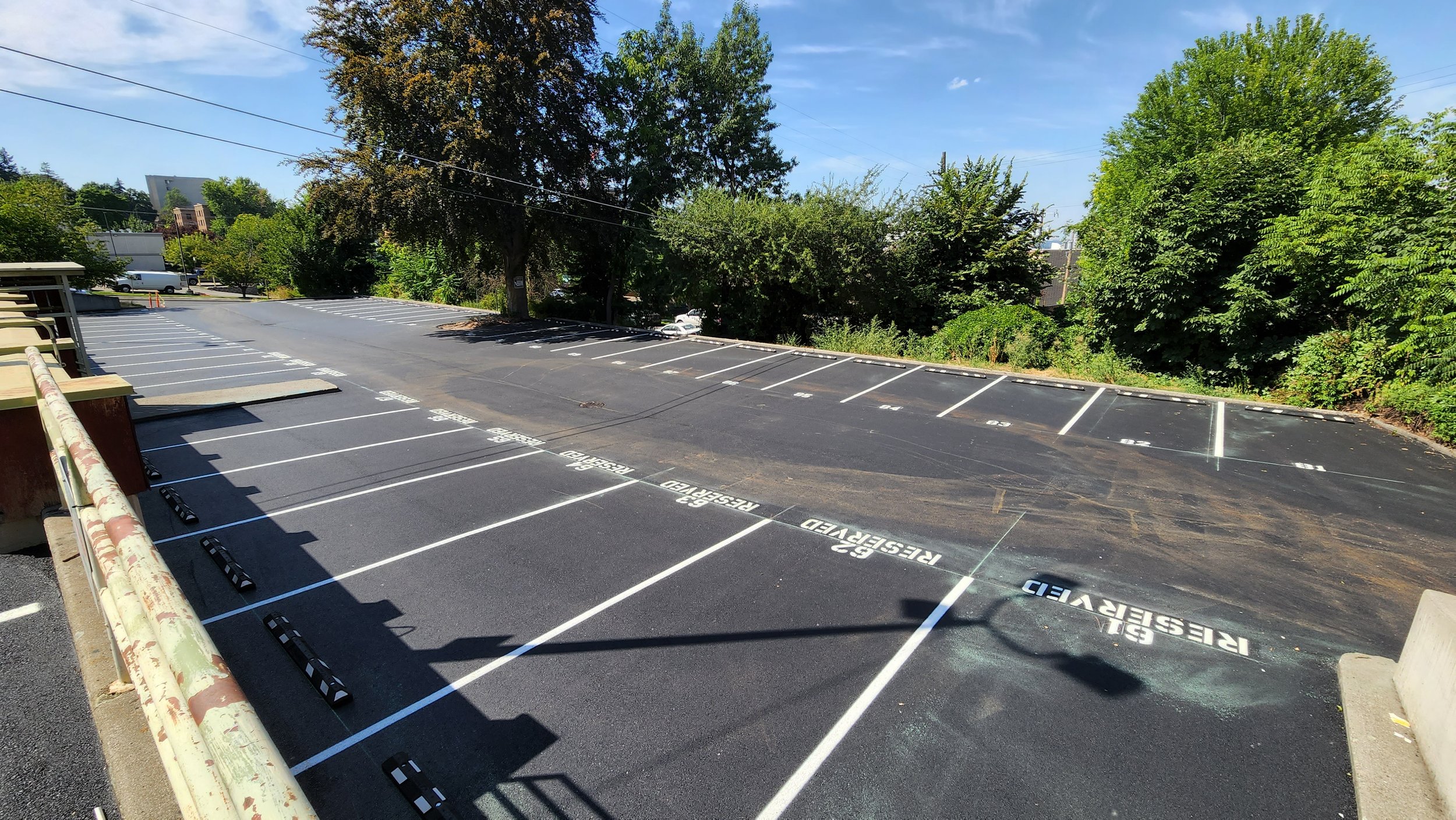
Wheel Stops, Signs, Speed Bumps
Parking Bumpers, Signage, and Traffic Control Services
At Bright Line, we provide comprehensive solutions to optimize your parking lot safety and traffic flow. Our services include the expert installation of high-quality wheel stops, effective signage, and various traffic control devices designed to improve organization and safety for both drivers and pedestrians.
Our wheel stops are available in rubber, concrete, and recycled plastic, and are installed with precision to prevent vehicles from encroaching into restricted or pedestrian areas. We also install clear and durable signage—such as parking regulations, directional signs, and safety notices—that enhance navigation and compliance within your property.
In addition, we provide a range of traffic control devices, including speed bumps, directional arrows, crosswalks, and safety barriers, all installed to meet safety standards and specific site requirements.
Trust our experienced team to deliver durable, compliant, and visually appealing solutions that create a safer, more organized parking environment for your facility.